We are looking forward to the first harvest of garden strawberries. And, of course, we are upset if instead of a strawberry field we find moldy berries in indecently small quantities. What could be the reason and how to avoid trouble? We will tell you about the most popular diseases and pests of leaves, flowers, roots and berries of strawberries. We will find out where they come from and how to treat strawberries from diseases and pests.
1. Main diseases and pests
2. How to protect strawberries
3. Berry diseases
4. Pests of flowers
5. Root diseases
6. Leaf diseases
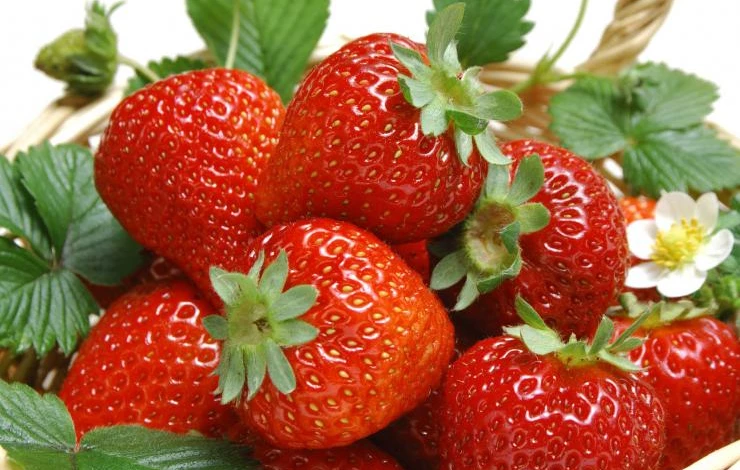
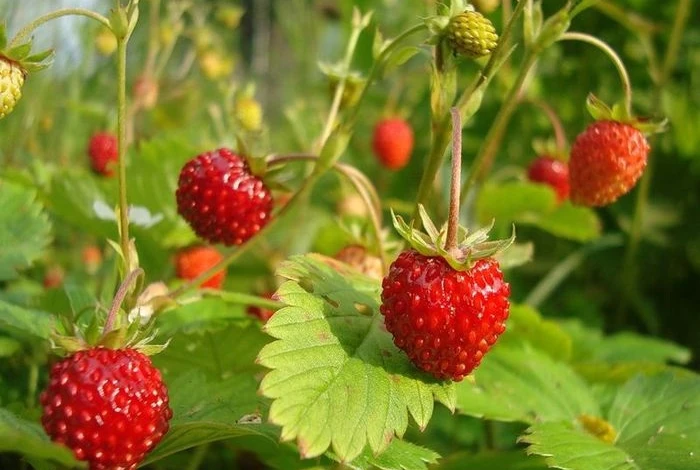
Photo: Garden strawberry
Description of the main diseases and pests of strawberries
Strawberries are usually affected by fungal diseases. They appear on leaves and berries. Most often, strawberries get sick when they are over-watered.
What diseases does strawberry suffer from?
- anthracnose,
- septoria,
- powdery mildew,
- gray mold (in wet years it can completely destroy the crop).
Septoria, anthracnose and powdery mildew appear as spots on the petioles and leaves, which are most often rusty.
All fungal diseases actively multiply in high humidity!
Photo: Powdery mildew on strawberries
Along with traditional agrotechnical and chemical means of combating strawberry pests, environmentally friendly measures are brought to the forefront – folk remedies (infusions and decoctions of insecticidal plants), as well as biological preparations that are effective and safe for humans:
Biopreparations
- from gray rot – alirin, planriz,
- against weevils, spider mites and caterpillars – bitoxibacillin.
Chemical peraparts
The following chemicals are permitted for use on strawberries:
- for leaf spots – Bordeaux mixture,
- from the mole cricket and ants – Thunder,
- from the weevil — Intavir.
How to protect strawberries from diseases
- Water moderately and in a timely manner. Strawberries are watered no more than 2 times per season: during the flowering period and during the fruiting period. During the rainy season, watering is stopped.
- Try to prevent berries from coming into contact with the soil (mulch). Pathogens, such as gray mold, are abundant in the soil. When flowers, berries, or leaves come into close contact with the soil, active reproduction of fungal pathogen spores begins.
- Carry out preventive treatments – spraying with a blue solution (1%) of Bordeaux mixture. Can be repeated in the spring, as soon as the bushes emerge from under the snow.
Prevention of fungal diseases of strawberries (video)
Strawberry Diseases
Diseases and pests of berries can lead to a loss of 80-100% of the harvest.
Berry rot (gray, white, late blight):
- do not allow over-watering, thickening and contact of berries with the ground (mulch with straw, pine needles, sawdust, paper),
- observe crop rotation,
- do not allow excess nitrogen fertilizers,
- Plant only resistant varieties.

Photo: Berry affected by late blight
Gray mold of strawberries
The disease is widespread in all strawberry growing areas and is highly harmful. It affects all above-ground plant organs: leaves, ovaries, flowers, buds, peduncles, leaf petioles, and ripe berries.
Signs of gray mold:
- Brown, wet spots appear on the leaves.
- The petioles of the leaves and flower stalks first turn brown, then become wet, soften and break, as a result of which entire brushes with flowers or ovaries die.
- Green berries stop growing and dry up.
- The disease most typically manifests itself on ripe berries. They develop wet, brown spots that quickly increase in size, become covered with a gray fluffy coating and acquire a characteristic moldy smell. The berries become watery and colorless. Subsequently, they can mummify and remain on the bushes for a long time.
Conditions for the development of gray mold
- The pathogen overwinters on diseased berries and plant debris.
- Plants become infected in damp and cool weather.
- The optimal temperature for the development of the parasite is 18–20 °C, but its activity does not cease in the temperature range from 0 to 28 °C.
- The main condition for the development of the fungus is high air humidity, so in rainy years, crop losses from gray rot can reach 40–60%.

Photo: Gray mold on strawberries
Strawberry varieties resistant to gray mold
Varieties with short and unstable flower stalks, whose berries come into contact with the soil where the pathogen lives, are especially susceptible to the disease.
Varieties with erect flower stalks are much less susceptible to gray mold.
Among them, special attention should be paid to variety Annabred in the Mountain Gardening Department of the Research Institute of Gardening and Cultivation by breeder Svetlana Vasilyevna Pysina. It has erect flower stalks and is highly resistant to gray mold. In addition, it is slightly damaged by strawberry mites. The variety is distinguished by the uniform ripening of berries, which almost do not become smaller during the entire harvest period.
Highly resistant to grey mould Red Gauntlet variety.
Relatively stable:
- mascot,
- Festival Chamomile,
- amulet,
- Junia Smides,
- Barabinskaya is a new variety bred by the Research Institute of Horticulture.
And, on the contrary, the Fairy variety is highly susceptible to the disease.
Photo: Red Gauntlet variety is resistant to gray mold
How to get rid of gray mold on strawberries: control and prevention measures
How to get rid of gray mold – a widespread and harmful disease of strawberries. In the fight against gray mold, disease prevention is of great importance.
- The correct choice of a site for planting strawberries. The site should be level, well lit and well ventilated. It is necessary to avoid lowlands where cold air stagnates and the soil is very compacted, as well as sites located near water bodies.
- Avoid thickening, weediness and excessive soil moisture, excess organic and nitrogen fertilizers.
- Remove runners that weaken plants and reduce yield by 50%.
- To reduce the stock of infection in the spring, it is necessary to carefully remove and destroy plant debris along with the infection overwintering on them.
- To prevent contact of ovaries and berries with the soil where the pathogen lives, you can make a support from slats or twine. For the same purpose, at the beginning of the formation of ovaries, you can mulch the soil under the bushes with straw dust, pine needles, pieces of cardboard, roofing felt and other materials that prevent contact with the soil.
- It is useful to grow onions, garlic, calendula and marigolds on a strawberry plantation with a sparse planting scheme so that they do not shade the light-loving strawberries. Phytoncides secreted by these plants have a depressing effect on the causative agent of gray mold.

Photo: Welsh onions and strawberries in one bed
Treatment of strawberries from gray rot
The development of gray mold is limited by spraying the soil under the bushes:
- potassium chloride (100 g per 10 l of water),
- ash lye (2 cups of wood ash per 10 liters of water),
- dusting with slaked lime (15–20 g per bush).
Lime absorbs excess moisture and creates an alkaline environment that is unfavorable for the development of pathogens.
Biopreparations against gray rot
- To increase the resistance of strawberries to gray mold, you can use new generation preparations that are safe for humans and the environment. Among them, immunomodulators have shown a good effect on strawberries: Immunocytophyte (2 tablets per 3 l of water) and Zircon R (1 ml per 10 l of water).
- To destroy the infection, you can use biological preparations Alirin-B (10 tablets per 10 l of water), Planriz (20 ml per 10 l of water), Fitosporin-M (15 ml per 10 l of water). The first spraying should be carried out during the period of bud emergence, the second – at the beginning of flowering, the third – at the beginning of berry ripening.
All the listed measures for spraying and pollinating strawberries should be carried out twice:
- at the beginning of berry setting,
- at the beginning of their maturation.

Photo: Healthy Berries
Pests of strawberries and flowers
Flower pests are typical for neglected or very small plots. Berry pests can lead to a complete loss of the harvest.
Weevil
Even before the flowering begins, as soon as the first buds appear, a weevil (flower beetle) settles on the strawberries. It lays eggs in the buds that have not yet blossomed, which then turn black and fall off; accordingly, there will be no berries.
The peduncle has been gnawed by the raspberry-strawberry weevil.
- To protect strawberries from weevils, sprinkle the row spacing with sawdust soaked in creolin in advance. For 0.5 buckets of sawdust, take 1 tbsp. creolin, mix thoroughly. This will discourage the weevil from settling on your strawberries.
- Remove plant debris early in the spring,
- During the budding period of strawberries, spray with decoctions of wormwood and pine, 1% bitoxibacillin.

Photo: Weevil – a pest of strawberries
Slimy
The berries are eaten, traces of mucus are visible.
- Place traps (pieces of rags, old boards) around the area.
- Dust the soil with superphosphate, mustard, slaked lime, ash (30-40 g/m2), and a decoction of capsicum.
- Collect and destroy slugs.
Diseases and pests of strawberry roots
Root diseases and pests are very dangerous.
Large white larvae
The larvae gnaw at the roots and the plant withers.
- Spring and autumn digging of the soil is necessary.
- Destruction of larvae.
- Removal of lesions as they are detected.
- Most often they end up in an area with humus.
Root rot
Root rot causes the lower leaves to wilt in the second half of summer.
- Crop rotation with the use of green manure will help.
- If root rot is detected, the plant must be destroyed immediately.
- Infection from the roots of uprooted diseased trees is possible.

Photo: Root rot
Black root rot
The plants are depressed, bear almost no fruit and do not form horns, and are easily removed from the soil.
- Affected plants are removed and burned.
- It is necessary to observe crop rotation with the use of green manure.
Phytophthora of roots
On warm, dry days in spring and early summer, the entire plant or leaves suddenly wilt.
- Remove and burn affected plants.
- Observe crop rotation using green manure.

Photo: Strawberry beds
Diseases and pests of strawberry leaves
Leaf rollers, sawflies and leaf beetles
They eat, skeletonize and cover the leaves with cobwebs.
- Plants are sprayed with 1% bitoxybacillin when pests appear en masse (in spring during growth and in the budding phase).
Strawberry (transparent) mite
The leaves are bumpy, young ones are small, corrugated, do not grow, white mites are visible when enlarged.
- There are no effective methods of control other than planting healthy planting material of resistant varieties.
- After picking the berries, you need to mow the leaves.
Common spider mite
The leaves are rusty-reddish, with red mites visible on the underside when magnified.
- Do not allow the plantation to dry out; mow the leaves after harvesting.
- Treat with 1% bitoxybacillin when the pest appears.

Photo: Spider mite on strawberries
Powdery mildew
White coating on the underside of the leaves, they become rough, curl up into boats. The leaves may first be mealy in color, and then gradually become covered with rust.
- Immediately after flowering, spray with colloidal sulfur, and again after picking the berries.
- Collection and destruction of plant debris (mowing leaves after picking berries).
- Do not allow it to thicken.
- Plant resistant varieties.
Verticillium wilt of plants
The leaves lie down radially, small, chlorotic leaves appear in the center of the bush, later the bush becomes reddish-yellow, marginal necrosis of the leaves begins and the bush dies.
- It spreads by runners and through the soil, where it survives for several years.
- It is necessary to use only the best predecessors – green crops, legumes, green manure.
- Immediately remove diseased plants along with their tendrils and partially the soil layer.
Leaf spots (white, brown, angular)
- It is necessary to avoid over-watering the area.
- Destroy plant debris.
- Spraying plants in the spring before the beginning of the growing season with Bordeaux mixture, 3% urea solution or 1% ferrous sulfate solution.
- Strictly observe crop rotation.
- Mow the leaves after fruiting.

Photo: Strawberry leaf spots