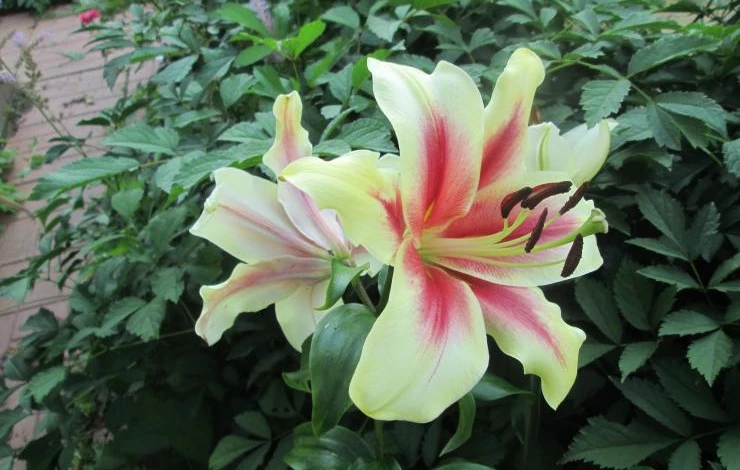
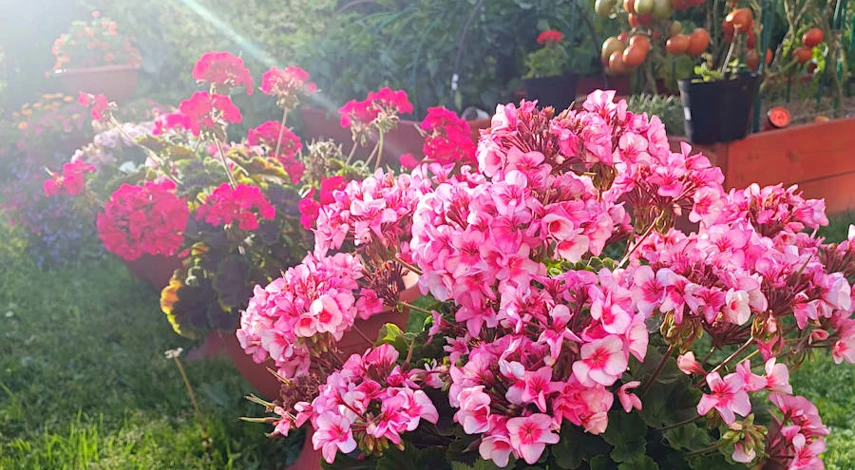
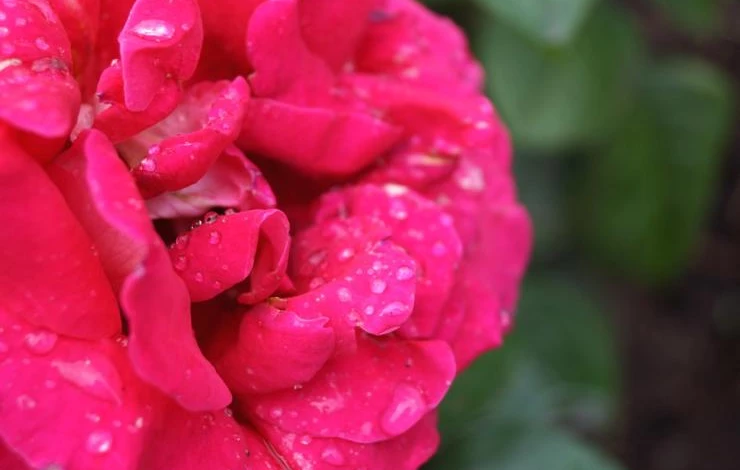
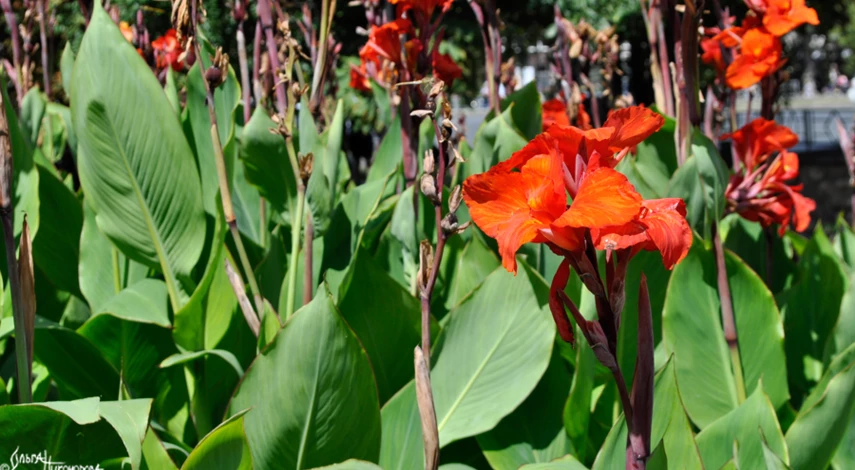
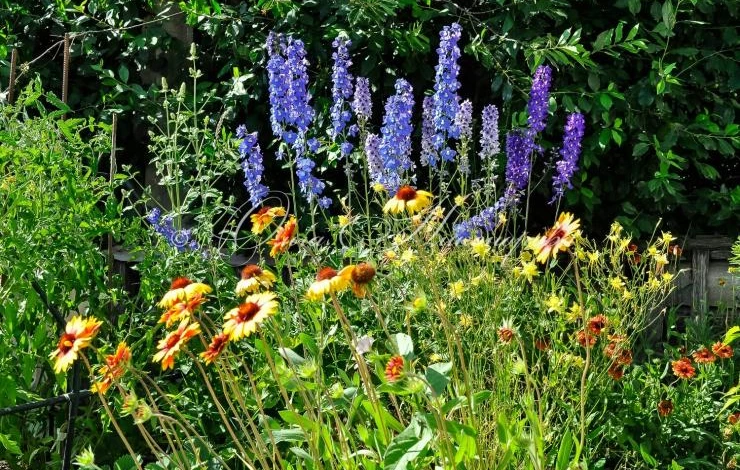
These flowers are so beautiful that they will not leave anyone indifferent. They are like soldiers in the garden beds, it’s not for nothing that zinnia is called the major – a flower with bearing. In addition, zinnias are unpretentious, and even novice gardeners can grow them. How to plant zinnia, growing and caring for it in open ground – we will talk about this and much more in detail in this article.
Table of contents
1. Description of the plant 2. Rules for planting and care 3. Caring for zinnia in open ground 4. Sowing zinnia seeds for seedlings and open ground 5. Types and varieties 6. Experience of growing zinnia from readers
Description of zinnia: general characteristics
The origin of the plant stretches back to Mexico itself, from where it was brought to Europe in the 18th century. The flower was named in honor of Johann Zinn, a German botanist and physician, an honorary member of the Berlin Academy of Sciences.
Zinnia is considered an ornamental plant and, like most ornamental flowers, it is unpretentious.
- The main varietal differences relate to the size of the stem, inflorescences and their colors:
- The stem of the plant can reach from 20 cm to one meter in height, covered with wide, dark green, oval-shaped leaves with large veins.
- The buds open up to 14 cm in diameter during the flowering period.
Although the flower is a perennial, it is not able to realize its longevity in a cold climate.
In landscape design
Zinnia blooms begin in June, and in some varieties in July.
- Zinnias are well suited for growing with smaller plants – they will not overshade them, or for decorating ponds and sculptures.
- Majors look equally good both in the garden and at home in pots.
- As cut flowers, the plants can stay fresh for up to two weeks.
Zinnia belongs to the Asteraceae (Asteraceae) family; this genus includes about 20 species of annual and perennial shrubs and herbs.

Planting and caring for zinnia
There are not many rules for planting and care, so they will not take much time and effort. The algorithm is as follows:
- Choose the right place for sowing.
- Prepare the soil and planting material in advance.
- Plant flowers with seeds or sprouts.
- Water the bushes on time, loosen the soil and remove weeds.
- Trim as necessary.
Choosing a location. When choosing a landing site, you should be guided by two main criteria: the place should be sunny and protected from strong gusts of wind. Majors develop poorly in the shade and bloom noticeably worse.
Soil preparation. Zinnia seeds are demanding on soil quality; they do not tolerate clay, rocky and heavy soils. Such an area should be well harrowed and thoroughly fertilized with coarse sand and compost.
Ideally, light soil with good drainage properties, fertile and rich in humus is required. It will be quite normal if the average acidity value throughout the season fluctuates around 7-8 pH.
Council
Zinnia will benefit from regular fertilization. It is best to add liquid fertilizers along with watering once every six months.
Planting material. Seeds should be prepared in advance. First, they must be separated from empty and weak grains. The easiest way to do this is to pour the grains into salted water – all the husks will remain floating on the surface, and healthy and strong seeds will settle to the bottom. To make the seeds germinate faster, before planting they are wrapped in a small rag and moistened with an epin solution.
Landing dates. To determine planting dates, it is best to be guided by personal observations of weather conditions:
- the earth must thaw and warm up (majors are heat-loving);
- before landing, make sure that cold weather is not predicted in the near future;
- sowing seeds directly into open ground should begin at the end of April;
- seedlings should be planted a little later, starting in mid-May.

Sowing zinnia seeds for seedlings
Sowing zinnia seeds in open ground is suitable mainly for the southern regions.
Sowing rules:
- Prepare the soil, if it is “undesirable”, add sand and humus.
- Maintain a distance between holes of at least 30 cm, and the sowing depth does not exceed 4 cm.
- Water the weeds before planting and, if present, remove large stones from the ground.
- Place a couple of seeds into the prepared holes and sprinkle them with a little soil.
- After planting, moisten the crops with a spray bottle.
Sowing zinnia seedlings is almost no different from planting seeds in the ground. But there are several nuances here:
- sowing of seedlings is carried out a couple of weeks before sowing in open ground (usually at the end of April);
- seeds are buried 6 cm;
- the distance between seedlings should be about 40 cm;
- after sowing, the soil is moistened abundantly, the plantings are covered with film to create a greenhouse effect;
- when the first shoots appear, the insulation can be removed;
- The seedlings are stored at room temperature until planting on the site.
Sowing in pots. Do you want to grow them in pots and decorate all the windows with flowers? Nothing could be easier!
The soil mixture will be the same as for seedlings – a universal mixture from the store will suffice. Check for drainage holes in the bottom of the pots. If they are missing, you will have to do them yourself.
Store finished pots in a place protected from direct sunlight at room temperature. Water just enough to moisten the soil well, but not allow the water to stagnate.
Landing. There are no special features in planting seedlings in open ground. The main thing is not to damage the roots of the plants, so they are transplanted into holes along with the soil. To simplify the work, you can grow seedlings in peat containers in advance. The peat cup can be completely planted in July without removing the seedling.

Caring for zinnia in open ground
Caring for shoots will not cause much trouble if it is carried out regularly and consistently:
- Feed the crops with fertilizers several times a season: the first time half a month after planting and again at the beginning of flowering.
- If you water during the day, make sure that water, if possible, does not get on the leaves and inflorescences.
- After every second or third watering, carefully loosen the top layer of soil and remove weeds.
- Pinch out young shoots to encourage plants to bush more.
- Mulch the soil so that the soil does not dry out and moisture does not stagnate.
- Carefully trim off faded baskets and dried leaves.
Do not forget to water the seedlings generously, especially if the weather is hot.
Diseases and pests
Of the diseases, only fungal diseases are mainly dangerous. This is why it is so important to monitor the moisture level of the plantings.
You should be wary of: powdery mildew, gray mold, alternaria, sclerotinia.
Among the pests you can encounter aphids, which are diligently bred by ants, snails (they are always not averse to eating greens), cutworms, and phytomysis flies.
Treatment of diseases. All diseases are treated by digging up and burning the sickest bushes and treating all others with a special antifungal drug, and insecticides are suitable for insects.

Types and varieties
As already written above, there are about 20 species of zinnia. But only a few of them are used for breeding and horticulture. And here are the most popular varieties among gardeners today.
Zinnia graceful
The bushes grow from 30 cm to a meter in height with a rigid, erect stem and large lush buds in white, purple, pink and yellow colors. The leaves are ovoid in shape with pointed tips, covered with down. The inflorescences (from 5 to 15 cm in diameter) are collected in a basket and look like chrysanthemums, marigolds and dahlias. Without watering, the inflorescences fade and decrease in size. The distance between bushes is maintained at least 25cm.
Variety “Polar Bear”
A distinctive feature of this variety is large white flowers with an unusual greenish core. Bears grow up to 65 cm in height and are well suited for mixing with other, more dwarf varieties.
Variety “Lavender”
A giant among its species, it grows up to 80cm in height. It has soft purple large buds. Just like the previous variety, it is well suited for mixing with smaller brothers.
Zinnia Haage (narrow-leaved)
Although the plant is an annual, it copes well with self-sowing seeds. The bushes grow up to 40 cm in height with a strong stem that branches strongly from the base, so the plant resembles a ball. Inflorescences-baskets are simple or double, 4-6 cm in diameter. The color of the petals is cream, yellow, orange, red-brown, often two-tone – the petals are covered with contrasting spots, rings or a border. The variety blooms from early June until frost.
Zinnia «Shaggy Dog»
The variety got its name from its huge, shaggy (like a dog), pink buds. The plant is an annual, and like the previous variety, it blooms only at the beginning of autumn.
Zinnia dahlia-flowered
It has strong bushes from 60 to 120 cm in height, long peduncles, convenient for cutting. The oval leaves are arranged in pairs opposite each other. The basket inflorescences of this species are up to 15 cm in diameter with a variety of juicy bud colors. The elongated petals-tongues overlap each other, as a result of which the opened bud seems to be tiled.
Experience from our readers
I prefer to propagate perennial varieties of zinnia with seedlings. I sow the seeds 6 weeks before planting in the flowerbed. I prepare the soil mixture myself from sand, peat, soil (in equal proportions) and turf (you need twice as much). With this ratio, the substrate will be loose, and water and air will penetrate well there.
I disinfect the garden mixture. After moistening the soil, I put it in the microwave for 3 minutes. Previously, I steamed it in an aluminum pan for about 10 minutes, stirring with a wooden spatula. When the earth became hot and began to release steam, cover it with a lid and keep it like that for half an hour. Then she took it out onto the balcony to cool. I plant seeds like this:
- I place a two-centimeter drainage layer at the bottom of the container.
- Not reaching 2 cm to the edges, I fill the container with soil.
- I spray the soil with a spray bottle.
- In the center of the container I make a hole 3-5 mm deep and plant 2-3 seeds treated with a growth stimulator.
- I sprinkle the seeds with soil, irrigate the soil, cover the containers with film and place them in a warm place (+23-25°C).
- Every day I let the crops “breathe” by removing the film and irrigating them.
- When the shoots appear, I change the temperature regime (+18-20°C) and water it daily (but don’t overwater it!).
Council
Do not forget about hardening off the grown seedlings 2 weeks before transplanting them into open ground. And a month before transplanting, feed the seedlings with diluted manure.
I plant zinnias in the flowerbed in May, when the period of night frosts is already behind us. I dig holes at a distance of 35-40 cm from each other. I plant seedlings to a depth of 10 cm using the transshipment method so as not to injure the roots. And then I add soil from all sides and water the seedlings with water.
In the future, I try to water in the evening – there is no longer the scorching sun, and zinnia adapts more easily. I direct the stream to the root of the flower, but do not water the stems. And then I loosen the soil around the zinnia so that the water does not stagnate.
If I notice weeds, I pull them up by the roots – they take nutrients from my zinnia. I sprinkle dry peat around the stems – this reduces the growth of weeds. During the period of bud formation, I feed zinnia with complex fertilizer. Excessive fertilizing is not required to prevent the plants from growing very tall.
Zinnia feels great in the heat and can go without water for a long time. I do this: I throw a hose into the beds, turn on a thin stream of water and leave it for a couple of hours. I checked it specifically. After a good, deep watering, the zinnia lasted 2 weeks.

Photo pixabay/_Alicja_: zinnias will not leave anyone indifferent
More on the topic
 Planting zinnia for seedlings and in the ground: master class with photos
  Growing Echinacea: step-by-step photos for beginners
 What are your favorite zinnia varieties? Share in the comments.