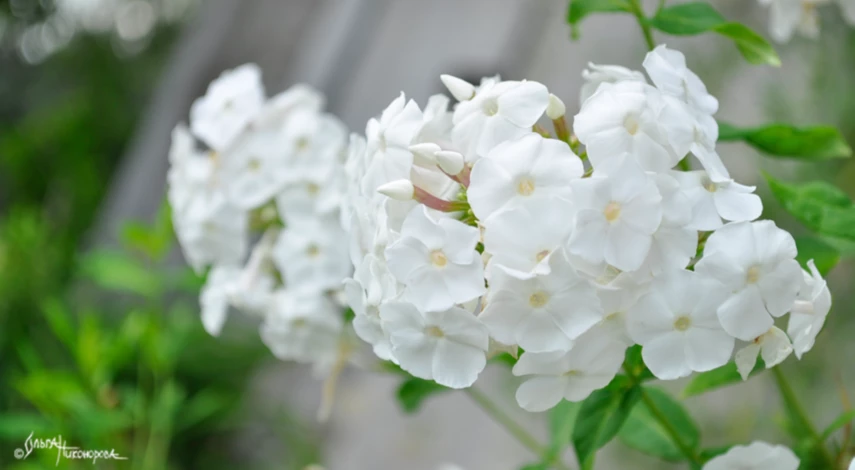
In this master class I will show you how to properly plant phlox in open ground in the fall. I’ll tell you how I prepare the planting hole and plants for planting, what to put in the hole when planting and how to provide proper care so that the plants quickly take root and take root well. See the article for more details, photos and step-by-step description of the process.
Table of contents
1. When to plant flowers2. Features of planting different types of phlox 3. Soil preparation4. Selection and preparation of a place for culture 5. How to plant phlox correctly in August and September6. Care in a new place
In this article I show the process of transplanting and planting a small phlox bush. It was densely surrounded by plants growing nearby, and it was necessary to plant it in another place. The process of preparing a planting hole, planting a seedling and caring for it during the first time after planting is described step by step.
Phlox planting dates
Phlox are perennial plants that grow in one place for a long time under favorable conditions.
When do you need to transplant or plant phloxes?
- The bush was not properly cared for.
- Phloxes have been growing in one place for more than six years and look bad.
- The shoots begin to thin out, the flowers grow small, and the bush loses its decorative effect.
- Plants are often affected by diseases, such as powdery mildew.
The best time to plant and replant phlox
Phlox is planted in the ground in spring, summer and autumn. Choose calm weather early in the morning or in the evening. It’s good if it rains.
|
What time of year
|
Landing dates
|
Under what conditions
|
|
Spring planting
|
Recommended to plant in April, May
|
When the frosts pass, the soil warms up and warmth sets in
|
|
Summer
|
End of August
|
When the heat subsides, after flowering
|
|
Autumn planting
|
September
|
A month before the onset of cold weather
|
Council
Phloxes are replanted approximately every 5-6 years if the flowers are healthy and doing well.
Planting phlox in spring
Spring replanting is carried out when the plant has begun to grow, but the height of the shoots has not yet reached 10–12 cm. In many regions, the right moment comes at the end of April or in the first half of May.
At this time, phloxes can be divided and replanted without a large clod of soil. They tolerate transplanting and planting well.
Planting phlox in summer
Summer transplanting and planting can be done at any time. But it is better not to do this during periods of extreme heat and drought, or to compensate for the lack of moisture with regular watering.
- If you replant in June – July, dig up the phloxes with a large lump of earth and do not divide the bushes.
- After planting in the summer, you need to water it abundantly and shade it from hot, direct sun.
Is it possible to replant phloxes during flowering?
It’s okay if you need to transplant flowering phlox in June, July and August.
In what cases can phlox be replanted during flowering:
- the soil is depleted, the flowers lack nutrition;
- the plant needs to be rejuvenated and new divisions obtained;
- the bushes are sick and withering;
- redevelopment, construction is underway, the design of the site is changing
Here’s what you need to do so that flowering bushes take root faster and are less stressed due to transplantation:
- Dig up and replant carefully with a large lump of earth. If the roots are not damaged, pruning will not be necessary and the phlox will continue to bloom after replanting.
- If the plant was severely damaged during replanting, it is better to cut off the peduncles and shoots so that the forces can be directed to growing roots. Phlox will bloom next year.
- To replant phlox in the hot summer months (June, July), select cloudy weather and replant in the evening. Check the soil moisture every day: it should not dry out.
Reference
In hot weather, phloxes are regularly watered after transplantation – these flowers love a little moisture.
Planting phlox in autumn
The best time for autumn transplantation of phlox is from the third ten days of August to September 20. In the southern regions the period is extended until October.
It is important to have time to plant flowers 3-4 weeks before frost arrives in the region.

Planting and replanting phlox subulate, paniculata, drummond
In early autumn, you can plant, divide and replant all types of phlox. When transplanting in late autumn, phloxes are not divided and are dug up with a large lump of earth.
|
A type of phlox
|
Transplant interval
|
Best time to plant
|
|
Paniculate
|
5–7 years
|
Spring Summer Autumn
|
|
Subulate
|
5 years
|
Vesna
|
|
Drummond
|
annual
|
Vesna, summer
|
Phlox paniculata perennial
- Plant at any time of the growing season – spring, summer and autumn.
- When planting in summer, you need to ensure regular watering for the first time after planting.
- Transplantation is carried out every 5–7 years.
Subulate Phlox
- It is best to plant awl-shaped phlox in spring or early summer, on a cool day. After this, you need to provide proper care for the plant so that the phlox takes root faster.
- Summer and autumn planting are also acceptable, the main thing is to ensure regular watering for the first time after the procedure.
- Replanted once every five years.
Annual Phlox Drummond
- Planting and planting begin in the spring, when the threat of return frosts has passed.
- You can replant all summer.
What to put in the hole when planting phlox
Phlox likes to grow in moderately moist soil. They need loose and fertile soil, so additional sand and peat are added before planting. The culture prefers soil with neutral acidity.
Fertilizers when planting phlox
| Why contribute | What to contribute |
|
For deoxidation of acidic soils
|
Fluff lime or Dolomite flour
|
|
For loosening heavy, dense, clay soils
|
Sand, peat, humus or compost
|
|
Under digging
|
Humus or compost
|
|
For drainage
|
Sand, small crushed stone or expanded clay
|
|
In the hole when planting
|
Ash
Compost or humus
Phlox planted in the fall are fertilized with phosphorus-potassium fertilizer without nitrogen.
In spring – complex universal fertilizer
|
|
For mulch
|
Compost, humus, peat, pine bark, straw and dried grass clippings.
|
|
For shelter for the winter
|
Spruce branches, non-woven material
|

Place for planting phlox
Sites are selected to meet the requirements:
- with groundwater located close to the surface;
- well lit, but with slight shading during hot sunny afternoon hours;
- protected from strong gusts of wind and drafts.
What are phloxes combined with when planting?
|
Phloxes are not planted
|
next to fruit trees and shrubs – they will oppress the flower
|
|
Phloxes are often planted
|
along the house, fence, outbuildings – provide diffused light and protect from the wind
|
How to prepare the soil when planting phlox
Preparing the planting site begins 1–2 weeks before planting.
1. Dig up the ground
Before planting, carefully dig up the soil using a spade and remove all weeds. When digging, add organic fertilizer – humus or compost. For 1 sq. m take 7–8 kg of organic matter.
2. Dig a hole for planting
- The planting hole is dug 7–10 cm wider in diameter or 30–40% larger in volume than the root system of the plant being planted.
- The depth when planting phlox is approximately 30 cm.
- Drainage made of sand, small crushed stone or expanded clay is poured onto the bottom.
3. If there is no organic matter, then granular fertilizer is added to the hole.
- In the fall, only phosphorus-potassium fertilizer is applied, without nitrogen content, as well as ash and compost (humus).
- In spring and summer, you can use any complex, universal fertilizer.
Reference
The distance when planting phlox is 50–60 cm for paniculate species.
Planting perennial phlox in open ground: step-by-step instructions with photos
In this master class, I plant a small phlox bush that needed to be transplanted to another place. I will dig up phlox with a large lump of earth and place it in a pre-prepared planting hole.
Using the technology that I show in the photo, the plant will experience minimal stress and will quickly take root in a new place.
1. To plant, I will dig up a small bush, so the day before I water the flower abundantly.

2. Using a shovel or pitchfork, I carefully dig up with a large lump of earth. The division should have from 3 to 6 stems with powerful roots. If the roots are long, more than 20 cm in length, they can be trimmed.

3. Before planting, the planting hole is watered generously, especially if the weather is dry and hot. If the weather is cool and rainy, we omit this item; there will be enough natural precipitation.

4. Add one cup of sand and 1/2 cup of wood ash to the hole. Distribute evenly over the surface.

Here I also add a little “autumn” phosphorus-potassium fertilizer in granules: one handful for the entire volume.

5. I place the phlox seedling in the center so that the root collar is 3–5 cm below ground level. It needs to be buried a little, since phlox has a superficial root system. This deepening will help preserve the buds at the base of the bush, from which new shoots will grow next year.


7. I compact the soil with my hands and make a roller out of the soil. It will help keep water from spilling over the surface of the ground during irrigation. I cut phlox shoots to 20–30 cm.

9. I water the planted plant generously with a growth stimulator: 1–2 drops of Epin per bucket of water.

10. Plantings are mulched with compost and pine bark.

Dividing phlox during planting
When you plant a dug-out bush, it can be divided when transplanting. If the phlox bush is small, then divide the dug section with your hands or a knife. Large bushes are divided with a shovel or pitchfork.
- Each new division should have at least 2-3 strong, healthy shoots.
- The roots should be powerful and branched, healthy, without signs of rotting or blackening.
- If there is rot or damage on the roots, they are cut off with disinfected pruning shears.
Care after planting phlox
The main care for phloxes after planting and replanting is watering. In dry hot weather – abundant, in rainy, cloudy weather – moderate. The main thing is that the soil under a young planting should always be slightly moist so that the roots do not dry out.
To retain moisture, the soil is mulched, then there is no need to loosen and weed. The shoots are cut off and the phloxes are covered with spruce branches for the winter.
|
Procedure
|
Features of the event
|
|
Watering
|
The first three days after planting, phlox is watered daily. Then water regularly for 1-2 weeks so that the soil is always slightly moist. Then the plant will quickly take root.
|
|
Top dressing
|
If fertilizers were added to the soil during planting, then in the first year after planting the plant is not fed.
|
|
Trimming
|
In most regions, after planting, the plant is cut back to soil level with small stumps. In the southern regions, phlox is cut to a height of 5–10 cm. All cut parts of the plant must be burned or removed from the site.
|
|
Shelter
|
The roots of phlox are located close to the soil surface, so for the winter it is recommended to mulch them with a thick layer of compost, peat or humus with a layer of 8–10 cm. This will protect the plant buds from freezing and will serve as a top dressing in the future.
It is especially important to cover rooted cuttings that were planted this season for the winter.
|
In addition to mulching, young phlox can be covered with spruce branches or covered with non-woven material. But this must be done with the arrival of the first frost so that the plant does not die out.
Important
Don’t overdo it with watering. From an excess of moisture, the phlox will begin to hurt. If it rains, watering is reduced.

More on the topic
 15 varieties of phlox from the author’s collection: photos and descriptions
  Perennial phloxes: how to plant, what to feed, protect from diseases, cover for the winter
 How do you replant phlox? What rules do you follow? Share your recommendations with other gardeners in the comments!