Verbena is a beautifully flowering herbaceous unpretentious plant that will decorate any garden. The peculiarity of the plant is that it can bloom all summer long if faded flowers are periodically removed. We will talk about growing verbena, as well as what care the plant needs after germination and during other periods, in this article.
Table of contents
1. Varieties of crops 2. Preparatory activities before sowing 3. Sowing seeds for seedlings 4. Picking seedlings 5. Planting seedlings in open ground 6. Growing crops in open ground 7. Growing in pots 8. Diseases and pests9. Verbena propagation
Verbena: types and varieties
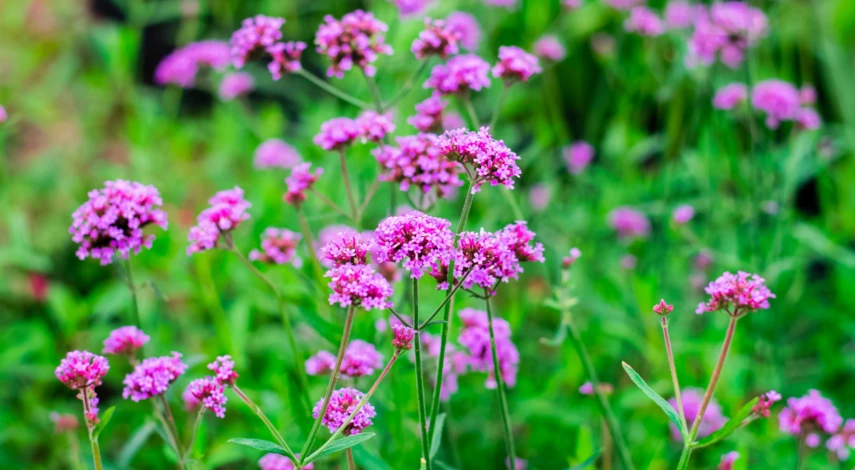
In its homeland, verbena grows as a perennial species, but in our latitudes, where there are frosts in winter, it is grown as an annual. Belongs to the Verbenaceae family. Flowers, depending on the variety, can be painted in different colors.
About 120 species of verbena are known. The most common are:
- finely cut verbena (swamp) — its leaves are elongated, and the flowers emit a pleasant aroma;
- hybrid — the height of the plant depends on the variety and ranges from 15 to 50 cm. The flowers are fragrant, the smell intensifies in the evening. The popular group of varieties is Quartz (low-growing plants up to 25 cm high), White Quartz variety (it has white flowers), Quartz XP Pink (with bright pink flowers);
- ampelous hybrid verbena — shoots reach up to 0.6 m in length. Popular varieties: Tapien, Temari, Amethyst.
- Canadian;
- fragrant;
- grandiflora — Ideal and Tuscany are considered beautiful and popular varieties;
- bonarskaya – plant height – up to 1.2 m. Recently popular among landscape designers. The varieties Lilac and Lilac Rain are chosen for planting.
Council
When buying verbena seeds, carefully read the description of the variety. There are low-growing varieties that need to be planted in the foreground, and there are tall varieties – more than 0.5 m, which should be planted in open ground in the background. Ampelous ones are planted in hanging flower pots and floor flowerpots, or in a high flower bed.

How to choose seeds, soil and container for sowing verbena for seedlings
Seeds that have been collected recently do not need to be processed before sowing. Before planting, stale seeds can be soaked in a solution of a growth stimulator for 15–20 minutes (in Epin, Zircon). Diluted according to instructions.
Seedlings are grown in different containers:
- common seedling boxes (wooden or plastic);
- wide plastic bowl (cake lid or food containers);
- plastic cassette;
- peat tablets;
- plastic or peat cups. You can also grow verbena in a pot.
There should be drainage holes at the bottom of the seedling container to allow water to drain. If the container has been used previously, it must be thoroughly washed with laundry soap and spilled with a pink solution of potassium permanganate. New containers can simply be rinsed with hot water.
For growing verbena seedlings You can use ready-made store-bought “universal soil” or “for seedlings.” The soil must be loose, breathable, nutritious, and have a neutral reaction. You can prepare the soil mixture with your own hands. To do this take:
- garden (vegetable) soil (1 part);
- peat (high) (1 part);
- sand (sifted) (0.5 parts);
- vermiculite or perlite (1 part);
- wood ash (0.25 parts).
Important
All ingredients are thoroughly mixed and disinfected. They are poured with a pink solution of potassium permanganate, frozen in the cold or calcined in the oven.
Growing verbena from seeds: planting and proper care of seedlings
It is important to consider the timing of when to sow verbena for seedlings: work is carried out in early spring (February – March).
- Drainage 1 or 2 cm thick is poured onto the bottom of the selected container. Perlite or expanded clay of the finest fraction can be used as drainage.
- Next, the soil is filled in until we reach 1–1.5 cm from the top edge of the container. This will make it convenient to care for the seedlings in the future: watering and loosening the soil.
- We water the soil with settled water at room temperature from a watering can with a thin spout or from a spray bottle. When the water is absorbed into the soil, we begin sowing.
- Verbena seeds are not very small, so you can plant them with your hands or help yourself with tweezers or a toothpick. If the seeds have been soaked, they are easily attached to the tip of a toothpick. If the seeds are dry, wet the tip of a toothpick.
- Seeds should be placed at a short distance from each other. No need to partition. We plant two seeds in an individual container. Then you can leave the strongest plant. In a common box we plant at a distance of 2–3 cm.
- When planting, lightly press the seed onto the soil with your fingers, but do not bury it too deeply. Sprinkle the top with a thin layer of soil or vermiculite (2–3 mm).
- Again, lightly moisten with a spray bottle and create a greenhouse effect. Cover with a transparent lid, if there is one, and place in a plastic bag with pre-drilled holes in it. You can cover it with glass or stretch film folded in 2 or 3 layers. We sign the container.
- We place the crops in a warm and bright place, where the temperature will be +22…+25° C.
Further care of crops is not much different from care of other crops. Every day you need to ventilate the container for about 20 minutes. Remove drops of condensation and, if necessary, moisten the soil with a spray bottle. Shoots usually appear after 8–10 days. As soon as green sprouts appear, we begin to increase the ventilation time. And after a few days we remove the lid.
Daylight hours should last at least 12 hours, ideally 14. If there is not enough light, you need to organize additional lighting with a phytolamp. Otherwise, the plants will grow weak, thin and crooked.
Watering should be done regularly and moderately as the top layer of soil dries out. Take settled water at room temperature. Melt water works well. Do not allow the soil to dry out too much or completely. The soil should always be moderately moist. Watering at the root.
Council
After watering, you periodically need to loosen the soil to a shallow depth. This is convenient to do with a bamboo skewer.

Picking and growing verbena at home in separate containers
Picking is carried out when the seedlings grow up and the seedlings grow two true leaves. This happens approximately 4 weeks after sowing. More fertile soil will be needed. Ready store-bought soil for seedlings is suitable. If we prepare the soil mixture ourselves, then we take:
- garden soil (2 parts);
- high peat (1 part);
- humus or compost (1 part);
- sand or vermiculite, perlite (1 part);
- wood ash (0.5 parts);
- you can add 0.5 parts of diatomite (soil improver).
Place in separate containers. The diameter of the container should be at least 5–7 cm. The seedlings must be watered abundantly within a couple of hours.
- We pour about 1 cm of drainage into the bottom of the container, then fill it with prepared soil.
- Form a hole in the center with your fingers or a spatula. If we dive into a common box, then the distance between plants is 5 cm.
- Carefully remove the plant with a small lump of earth. Help yourself with a spatula or other tools convenient for you. During the process, the roots of the plants are slightly injured, there is nothing to worry about.
- We plant in the soil, slightly deepening the plant to the cotyledon leaves.
- Using your fingers, lightly compact the soil around the planted plant and water it at the root.
- If the soil has sagged after watering, add a little more on top.
We place the picked seedlings in a place with bright but diffused light for 3 to 4 days. Then we place it in a brighter place. Ampelous varieties, when the plants grow 6-7 leaves, pinch them off. This will provoke the growth of side branches, and the bushes will become voluminous. Fertilizing is carried out 7–10 days after the dive – with any nitrogen-containing or universal liquid fertilizers.
Transplanting verbena into open ground
Before planting in open ground, young plants need to be hardened off. Hardening begins as soon as warm sunny days set in. Gradually increase the time spent in the fresh air.
The place for planting verbena is chosen to be bright, warm, protected from strong winds, with fertile and loose soil. The culture grows well surrounded by plants that do not shade or clog it. It is planted next to other annuals and combined with perennials.
- The soil is dug up and fertilized. Dig holes slightly larger than the volume of the roots of the seedlings.
- The distance between plants is 30–40 cm – depending on the type and variety.
- 2–3 hours before planting, the seedlings are watered with water.
- Carefully remove the roots from the container along with a lump of earth. They try not to disturb the earthen lump and not damage the roots.
- They are planted in the holes at the same level as the seedlings grew before and covered with soil. Compact the soil by hand.
- Water with settled water and mulch the soil around the plants with peat, pine chips or other materials.

How to grow verbena in open ground: useful tips for caring for the flower
Caring for a plant in open ground comes down to several important procedures.
- Watering. Verbena is a drought-resistant plant. You need to water regularly and moderately. Do not overwater the plant. Overwatering causes the roots to rot. In hot weather, we increase watering.
- Loosening and weeding the soil. After watering, it is advisable to loosen the soil and remove weeds.
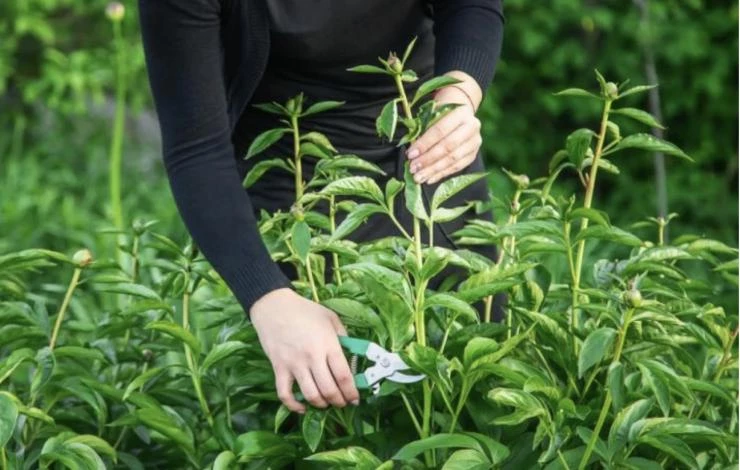
- Removing flowers. Throughout the warm season, it is necessary to regularly remove faded inflorescences – this is an important procedure when growing verbena in the garden. They are cut with pruning shears or pinched with fingers to one-fourth part. This stimulates the growth of shoots on which flowers will appear.
- Feeding. Verbena is fed all summer – with complex fertilizers, liquid or granular. Fertilizer is applied over pre-watered soil.
How to properly transplant a flower into a flower pot: step-by-step instructions
Ampelous verbena and low, compact varieties are most often planted in flowerpots. Several bushes are planted in a large pot at once. One plant at a time is planted in small flowerpots. It is best to plant in the evening or in cloudy weather. The soil is nutritious and loose. There should be drainage holes at the bottom of the pots.
- First, a drainage layer of 2–4 cm is poured.
- Then the soil is poured, not reaching the upper edge of the pot 2 cm. You can add hydrogel and long-acting fertilizer to the soil. For example, “Osmokot” or “Zion”.
- Plant by transshipment method, without disturbing the earthen ball. Make a hole in the soil and place the seedling in it. Cover with soil and lightly compact with your hands.
- Water with settled water at room temperature. You can add “Epin” to the water for irrigation.
A flowerpot or flowerpot is placed for 2-3 days in a bright but shaded place. And then they put it in the sunniest place. If a “long-lasting” fertilizer was added, then there is no need to fertilize any more in the summer. If not, then fertilize every 10–14 days with any complex fertilizer until September.
Watering is regular and moderate. In hot weather – several times a day. Periodically you need to remove faded flowers and pinch the tops of the shoots.
Main pests and diseases of verbena
With proper care, verbena practically does not get sick. From improper care she is affected by:
- powdery mildew. Garlic infusion helps against this fungal disease.
- gray rot. The affected areas are removed and sprayed with fungicide.
Among the insect pests on verbena you can notice:
- spider mite;
- aphid;
- scale insects;
- thrips.
Important
Pests are controlled with insecticides or traditional methods. Two or three treatments will be needed.
Flower propagation
The plant is propagated in two ways.
- Seeds – the most common way. Seeds are sold in stores or collected by hand.
- Cuttings — cuttings are taken in the spring from mother plants, which are stored in the fall in rooms with a temperature of about +10 ° C.

More on the topic
 How to grow petunia from seeds: growing features and step-by-step instructions
  How to grow lobelia and plant it in a flower garden: sowing seedlings, picking, care in open ground
 How do you care for your verbena? Tell us in the comments!